
History of the Pack Train Inn, Skagway, Alaska
In the early part of the 20th century, abandoned buildings and equipment littered the landscape in Skagway, Alaska. Most of the more colorful characters who defined the history of Skagway and the Alaska Gold Rush pulled up stakes to seek their fortunes elsewhere. The city's population plummeted, and one could be forgiven for thinking this may not have been the best time to build a new hotel.
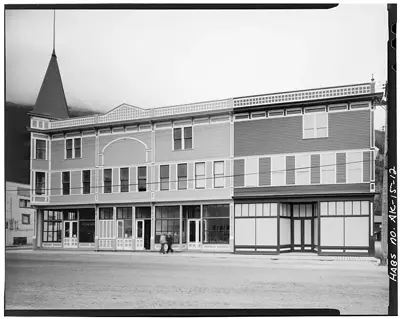
Boom, Bust and a Revitalized Broadway Street
Many of the current buildings on Broadway were relocated from other locations. The three-story Pack Train Inn, the tallest historic building in Skagway, comprises two former Camp Skagway barracks abandoned by the Army in 1904.
The buildings were purchased by Fred Patten and Chris Shea, who desired to revitalize the Broadway business district. Since the larger of the two buildings couldn't be moved in one piece, it was naturally sawed in half. Both buildings were relocated two blocks to the current location.
The newly remodeled building, complete with a stylish paint job and modern facade, opened in 1908. It was soon home to the Lynch and Kennedy clothing store and The Trail saloon (the 4th Avenue side of the building still sports the slogan “U-AU-TO-NO-THE-TRAIL”).
The Pack Train Inn building reflects the colorful history of post-Gold Rush Skagway. It has been home to conmen, ne'er-do-wells and many vital, legitimate businesses. Though renovated many times through the years —including one of the first concrete sidewalks on the interminably muddy Broadway Street—the building has retained its 1900s charm.
A Family Legacy
Owners of The Pack Train Inn since the 1950s, The Brena family has taken great care to preserve the legacy of this historic building.
The legendary tavern keeper Camillo “McGee” Brena operated The Trail Saloon for 18 years until his passing forced its closure. The Brena family then undertook a massive three-year restoration beginning in 1978. The project was made possible through Historic Preservation Grants-in-Aid funds, National Park Service input, and, in the true Last Frontier spirit of neighbors helping neighbors, a borrowed conveyor and jacks.
Our current second-floor restoration reflects the Brena family's desire to balance modern comfort and convenience with a nod to the legacy of Skagway's rich history. Guests can expect old Skagway to always feel right around the corner while enjoying the modern comfort of newly renovated rooms and a hearty, Last Frontier-sized free breakfast.
The Brena family invites you to enjoy Last Frontier hospitality and history at The Pack Train Inn.
"Famous characters drank over this bar."
A sign outside The Pack Train Inn, Skagway, Alaska cir. 1959. A sign on the building to the left of the door reads "Pack Train Beer Parlor. See the first and original bar of Skagway Gold Rush Days. Famous characters drank over this bar. Tex Rickard Robt E. Service Frank Slavin Peter Jackson Alex Pantages Frank Gotch Philadelphia Jack OBrien & Others." A sign on the door reads "We Sell Cigarettes [illegible] Kool. We Sell Cigarettes. Viceroy [illegible]." A thermometer beside the door reads "Cabin Still. Old Style Sour Mash Bourbon." And a sign in the left side of the image reads "Gold Dust Bought."Speaking of conmen and ne'er-do-wells (and legitimate businessmen), The Pack Train Inn may or may not have had many famous folks as patrons. The sign that hung outside for decades claimed its share of notorious gamblers, prizefighters, promoters and poets. As Skagway was the gateway to the Yukon territories, well, they certainly could have stopped by for a lukewarm beer and a 25-cent meal. (Chances are they actually stopped by the old Pack Train Saloon, also owned by Patten and Shea, but let's not let the truth stand in the way of a good tall tale).
Here are the notables from the sign as it appeared in this August 1959 photo, courtesy of the Ruth A.M. Schmidt papers, Archives and Special Collections, Consortium Library, University of Alaska Anchorage.
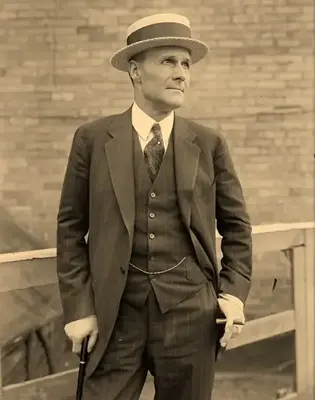
Tex Rickard
Tex Rickard was a gambler who sought his fortune in Alaska shortly after the discovery of gold here. Mirroring the boom and bust cycle of the gold rushes, Rickard amassed a fortune in the Yukon only to lose it all to gambling (including his stake in The Northern, the first of many of his gambling halls and saloons in Alaska, Canada and Nevada to share its name). Rickard headed north when Gold was discovered in Nome, beginning his career as a boxing promoter, the profession that eventually made him a household name. He went on to found the NHL New York Rangers and built the third incarnation of Madison Square Garden.
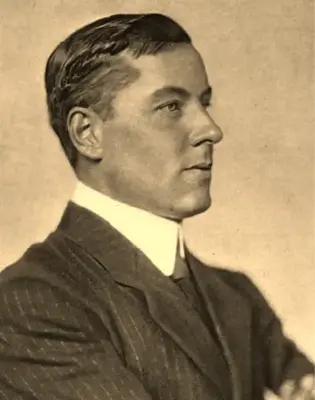
Robert W. Service
The “Bard of the Yukon,” Robert W. Service was a Scottish-Canadian writer and poet. (The tale of his misidentification on the sign as “Robt E. Service” has been lost to the ages.) Despite never participating in a gold rush, Service wrote two of the most famous poems of the era, “The Shooting of Dan McGrew” and “The Cremation of Sam McGee.” Service's collections “Songs of a Sourdough” and “Ballads of a Cheechako” brought him international fame and fortune, and he never had to wield a pickaxe.
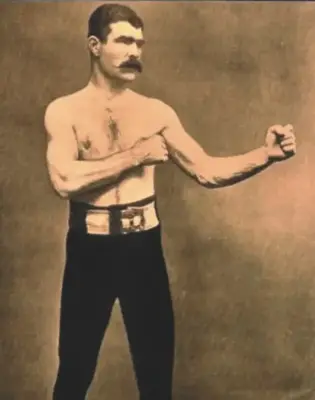
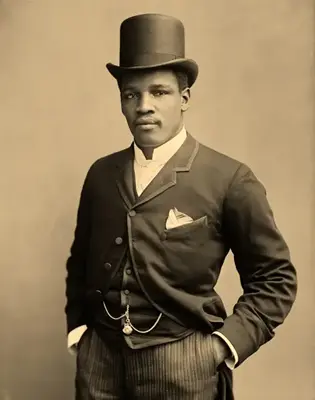
Frank Slavin and Peter Jackson
Legendary Australian heavyweight boxers and longtime rivals Frank “Paddy” Slavin and Peter Jackson held an exhibition match in Skagway in 1898. Slavin was once considered the World Champion by some, though most considered John Sullivan the titleholder (Sullivan was notorious for ducking challengers, thus the dispute). Jackson, who was Black, was unable to rise beyond Commonwealth champion due to racist policies of the day. Slavin continued boxing while chasing gold up and down the Yukon, while Jackson, in ill health and unable to continue boxing, returned to Australia.
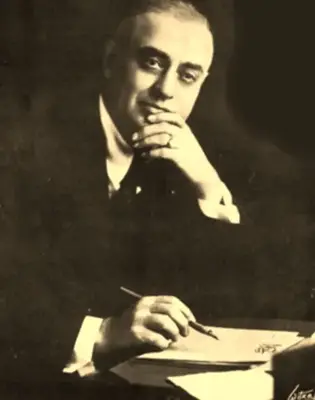
Alexander Pantages
Greek-American Vaudeville impresario and pioneering movie producer Pericles Pantages (who changed his name after learning of Alexander the Great) started his theater empire with the Orpheum in Dawson City, Yukon, in 1900. Pantages and his partner, burlesque and vaudeville star Katherine “Klondike Kate” Rockwell, built a fully-electric theater featuring motion pictures in addition to burlesque and vaudeville acts. By 1902, Pantages moved to Seattle, eventually owning and operating 84 theaters in the United States and Canada.
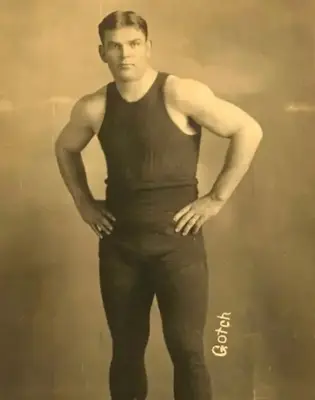
Frank Gotch
Professional wrestler Frank Gotch's early career saw him wrestle in the Yukon under the name Frank Kennedy, where he earned the title “Champion of the Klondike.” After trying his hand at boxing— completely overmatched against the likes of Frank Slavin—Gotch returned to the States, eventually becoming the first American world heavyweight freestyle champion.
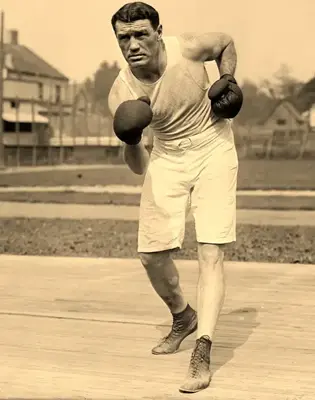
Philadelphia Jack O'Brien
In 1905, Philadelphia Jack O'Brien fought two boxing matches in Dawson City, Yukon and another in Fairbanks, Alaska. Later that year, he would earn the World Light Heavyweight Championship. Rather than defend the title, O'Brien moved up to the heavyweight class, battling the great champion Jack Johnson to a six-round draw in 1909.